
The challenges of traditional urban transport
Modern cities are facing unprecedented traffic congestion. Conventional delivery vehicles generate harmful air pollution, contributing significantly to emissions of fine particulate matter and carbon dioxide. This problem is exacerbated by the rise of e-commerce and the increase in last-mile deliveries.
Urban congestion generates considerable economic costs. Delivery delays, excessive fuel consumption, and premature vehicle wear represent substantial financial burdens for transport companies. At the same time, deteriorating air quality directly impacts public health, creating a vicious cycle where economic activity harms collective well-being.
Environmental impact of urban deliveries
Diesel vehicles used for freight transport emit particularly harmful nitrogen oxides and polycyclic aromatic hydrocarbons. These pollutants accumulate in the urban atmosphere, creating heat islands and degrading the quality of life for city dwellers. The carbon footprint of road transport represents approximately 15% of total greenhouse gas emissions in urban areas.
"Traditional urban transport contributes 40% of air pollution in European city centers, requiring a radical transformation of delivery methods."
Innovative eco-friendly urban transport solutions
Eco-friendly urban transport is gradually revolutionizing the logistics industry. Electric vehicles, particularly electric cargo bikes, are emerging as viable and efficient alternatives. These solutions combine operational efficiency with environmental responsibility, enabling significant decarbonization of the sector.
Electromobility offers sufficient range for most urban journeys. Modern lithium-ion batteries guarantee optimal performance with an extended lifespan. The charging infrastructure is rapidly expanding, facilitating the widespread adoption of these clean technologies.
Electric cargo tricycles: a silent revolution
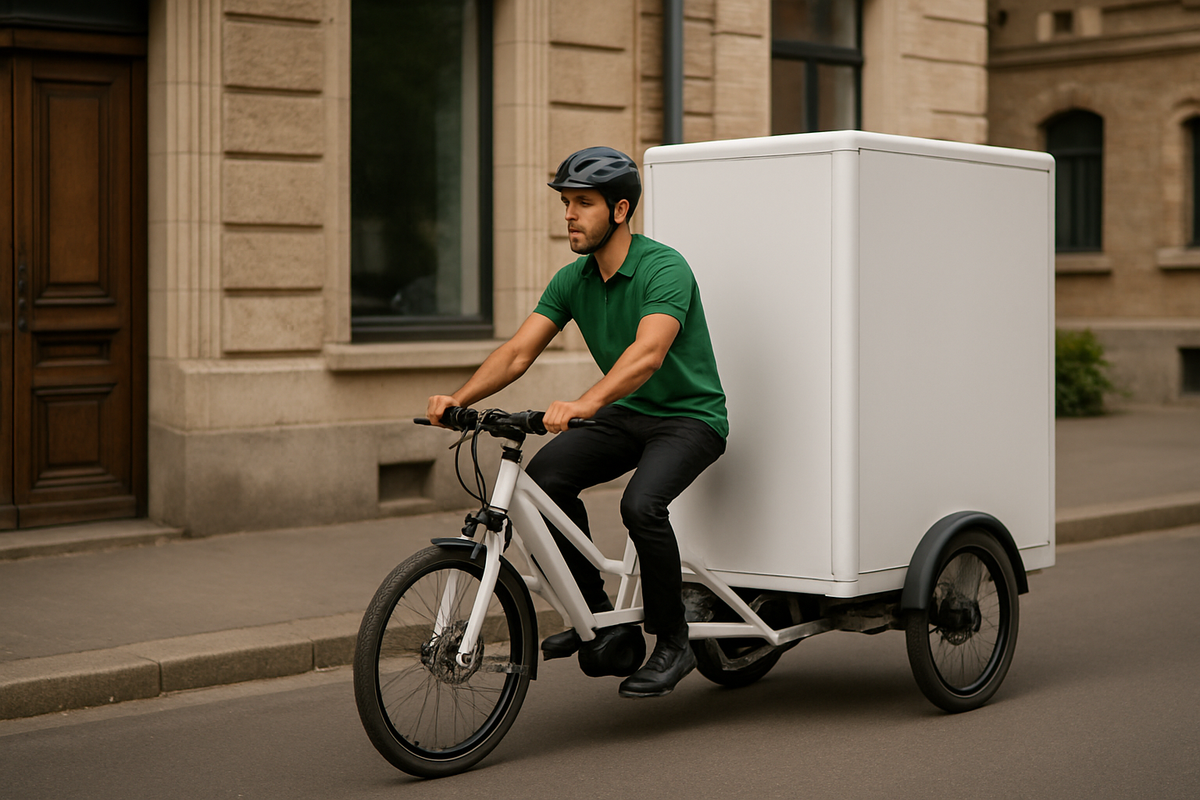
Electric cargo bikes represent a major innovation for eco-friendly urban transport. These electrically powered tricycles offer substantial carrying capacity while maintaining a minimal environmental footprint. Their ergonomic design allows for easy navigation through congested streets and restricted pedestrian zones.
Electroglide's collection of electric cargo tricycles offers solutions tailored to the diverse needs of urban professionals. These innovative vehicles combine robustness, range, and versatility to revolutionize traditional delivery methods. Whether for food distribution, parcel delivery, or local services, these electric cargo tricycles offer a high-performance, eco-friendly alternative.
Alternative propulsion technologies
Hydrogen is a promising technology for eco-friendly urban transport. Fuel cells generate electricity without polluting emissions, producing only water vapor. This technology is particularly well-suited to vehicles requiring extended range and reduced refueling times.
Second-generation biofuels also offer promising prospects. Produced from organic waste or algae, they significantly reduce the carbon footprint compared to conventional fossil fuels.
Route optimization and smart logistics
Artificial intelligence is transforming urban logistics planning. Optimization algorithms simultaneously analyze real-time traffic, weather conditions, and delivery constraints to determine the most efficient routes. This algorithmic approach significantly reduces distances traveled and energy consumption.
Pooling deliveries is a particularly effective strategy. Several companies share the same vehicles and routes, maximizing load factor while minimizing environmental impact. This collaborative synergy generates substantial economies of scale.
Urban consolidation centers
Peri-urban logistics platforms centralize goods before their final distribution. This hub-and-spoke approach optimizes last-mile delivery by using environmentally friendly vehicles adapted to the urban environment. Consolidation centers reduce the number of heavy goods vehicles circulating in city centers.
| Vehicle type | Range (km) | Load capacity (kg) | CO2 emissions (g/km) |
|---|---|---|---|
| Electric tricycle | 80-120 | 150-300 | 0 |
| Electric utility vehicle | 200-400 | 500-1000 | 0 |
| Conventional diesel vehicle | 600-800 | 1000-3000 | 180-250 |
Economic and environmental benefits
The transition to green urban transport generates multiple positive economic benefits. Operating costs decrease thanks to reduced energy consumption and maintenance. Electricity remains significantly cheaper than fossil fuels, particularly with the growth of renewable energies.
Government incentives are accelerating the adoption of these clean technologies. Subsidies, tax credits, and low-emission zones are creating a favorable environment for investment in electromobility. These measures partially offset the initial higher cost of eco-friendly equipment.
Improving the quality of urban life
The reduction of noise pollution is an often underestimated advantage of eco-friendly urban transport. Electric vehicles operate quietly, significantly reducing urban noise pollution. This characteristic improves the comfort of residents and preserves the tranquility of residential areas.
The air is gradually becoming more breathable with the widespread adoption of clean vehicles. Concentrations of fine particulate matter are decreasing, reducing the incidence of respiratory and cardiovascular diseases. This improvement in health generates substantial savings for public health systems.
Challenges and future prospects
Charging infrastructure remains a major challenge for the widespread deployment of eco-friendly urban transport. The territorial network must be densified to guarantee sufficient geographical coverage. Public and private investments are intensifying to develop these essential networks.
The range of electric vehicles continues to improve thanks to technological innovations. New generations of batteries offer increased energy density and reduced charging times. These technical improvements are gradually overcoming the last remaining obstacles to adoption.
Regulations and public incentives
Low-emission zones are proliferating in European cities. These areas restrict or prohibit the circulation of polluting vehicles, thereby encouraging the adoption of environmentally friendly solutions. This regulatory approach accelerates the energy transition of urban transport.
- Subsidies for the purchase of professional electric vehicles
- Preferential parking rates for clean vehicles
- Priority access to reserved traffic lanes
- Temporary tax exemptions to encourage adoption
The future of eco-friendly urban transport looks promising with the emergence of disruptive technologies. Artificial intelligence will further optimize logistics flows, while the Internet of Things will connect the entire transport ecosystem. These innovations will converge towards sustainable, efficient, and environmentally responsible urban mobility.
Transforming the sector requires a collaborative approach involving all stakeholders: local authorities, private companies, and citizens. This collective synergy will accelerate the transition to truly green urban transport, creating more pleasant and sustainable cities for future generations.

Share:
Sustainable mobility for professionals: a complete guide for 2026